
Sunday morning we enter our second Tasman National Park : Mount Field, where, after a good brunch we tackle the two-hour hike that lead us to waterfalls cascading making us go through rainforest growing giants of several tens of meters high.
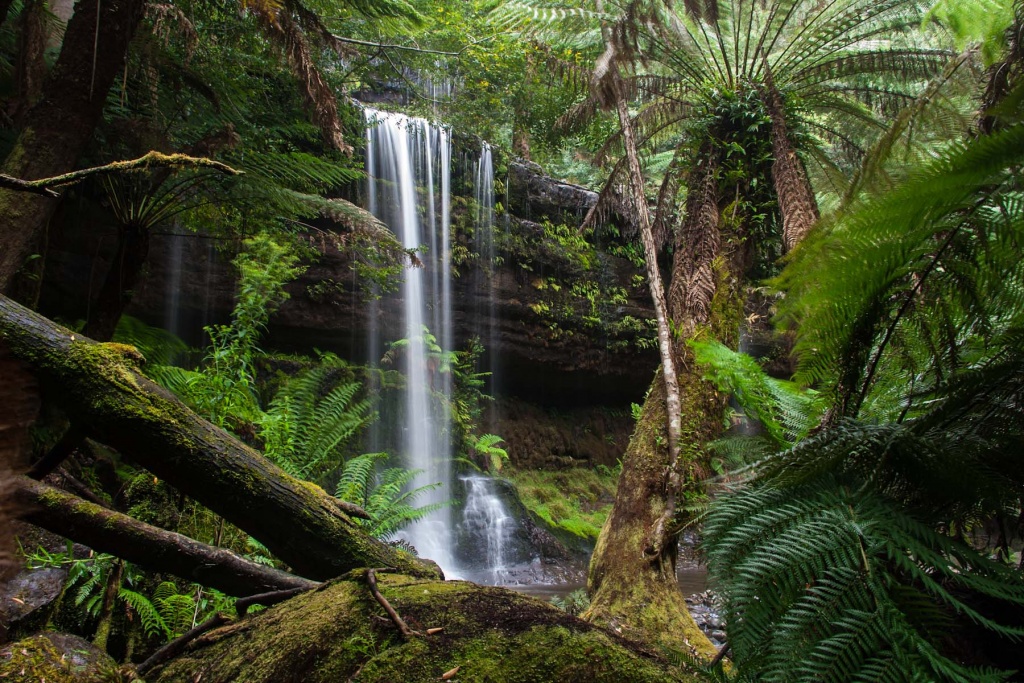
Russell Falls
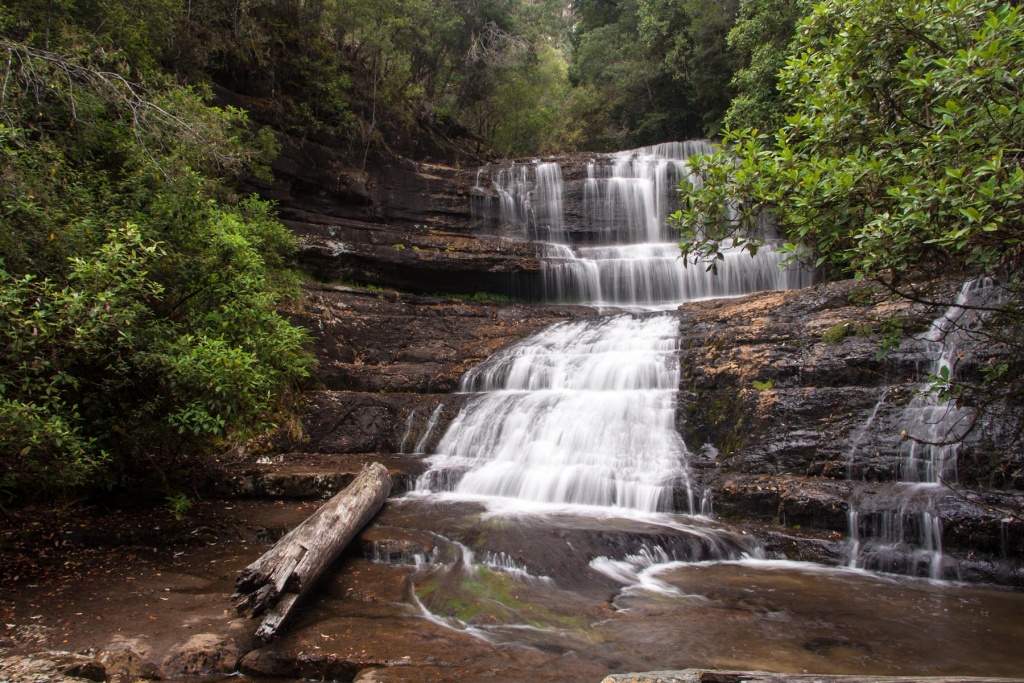
Horsehoe Falls
If Russell Falls is the most touristy – a few minutes walk from the park information center – they are also the highest and most impressive, which in no way detracts from the charm of Horsehoe or Lady Barron waterfalls.
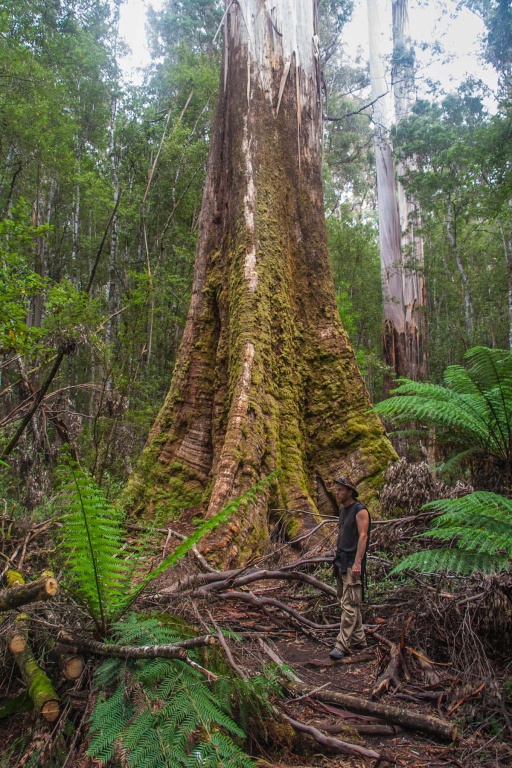
At the foot of a giant
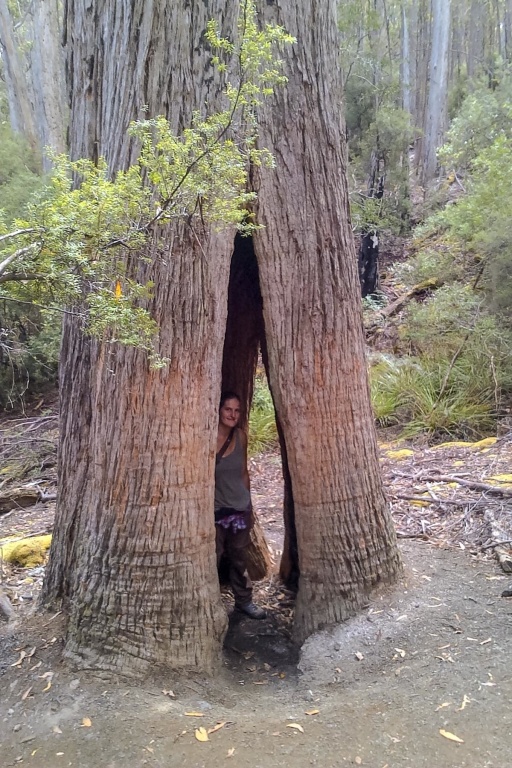
In a giant !
In the middle of the Tall Trees Walk we can experience an instrument that allows us to measure the size of trees : a dendrometer – I think this is the correct translation, whatever they indicated clinometer in English – the one we use is a simple metal tube with a viewfinder that must be pointed at the top of the tree, once the angle in relation to the horizon line is noted, a table gives us the tangent which we must then multiply with the distance between the measurement taker and the tree in question. After our mathematical exercises we go to the foot of this eighty meter colossus which continues to grow even today.
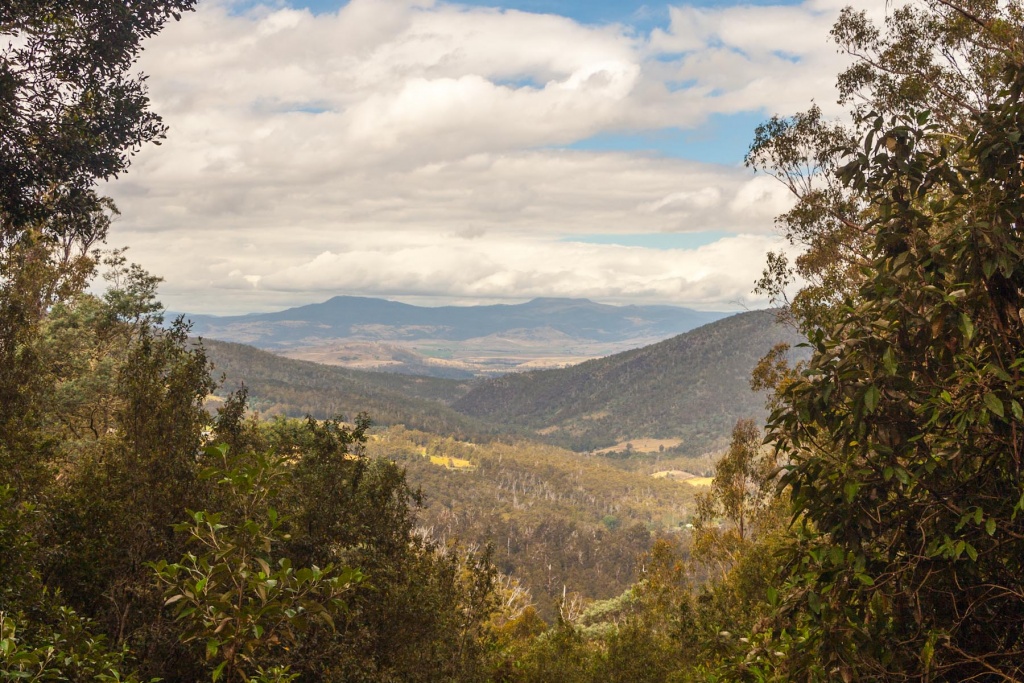
Mount Field National Park
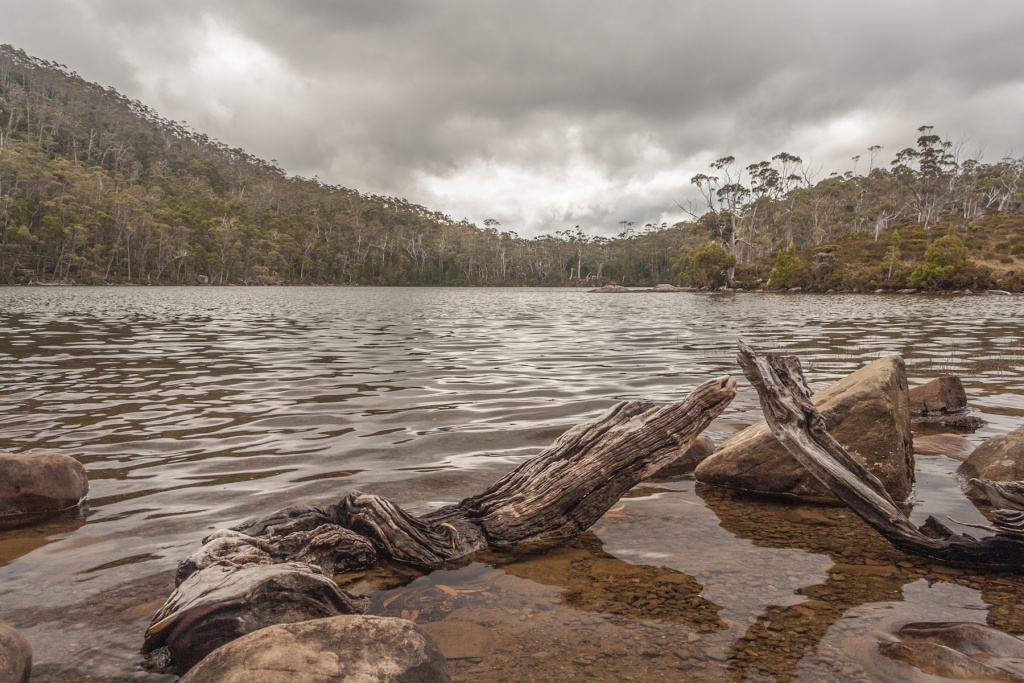
Lac Dobson
We take the car again to take the track in the foothills of Mont Field which stops at Lake Dobson where we stay for a moment with our legs in its cool and clear waters.. A little further down is Lake Fenton where we could not have set foot : respect for an area all around this lake is requested because it supplies Hobart with drinking water up to 20 %.
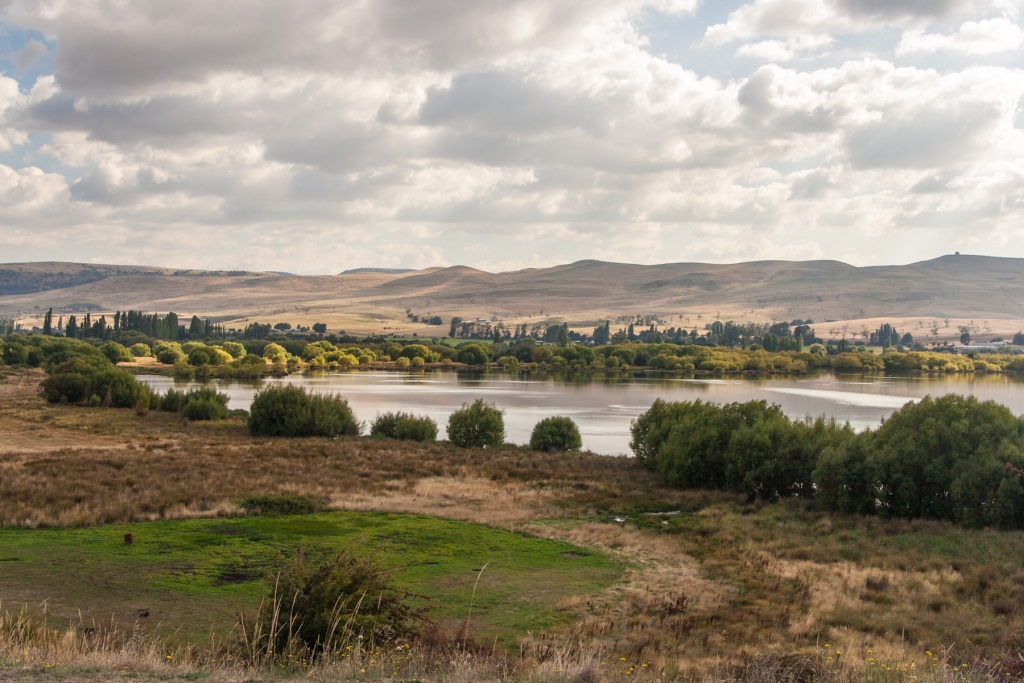
Lac Meadowbank
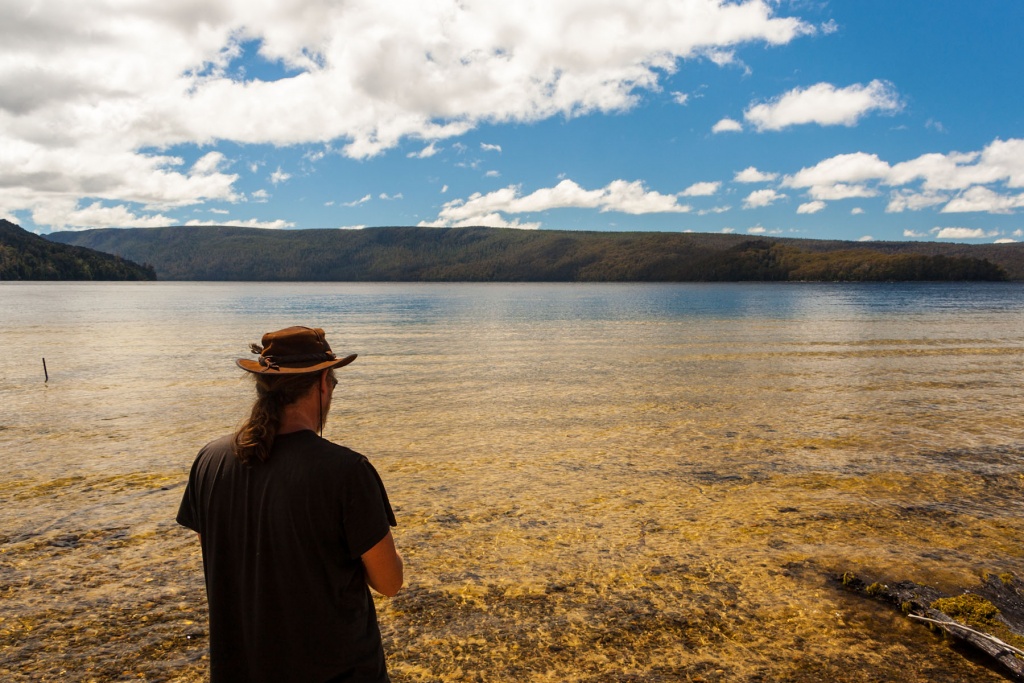
Ronald Lake Saint Clair
The day is well underway and we decide to return to our Meadowbank lake rather than begin crossing Cradle Mountain and Franklin Gordon national parks., located in central and south-west Tasmania, this last region is still wild : a set of parks untouched by any urbanization.
Monday we drive to the town of Derwent Bridge, whose gas station seems to want to prepare us for the price of diesel in the outback – 1,48$ per liter versus approximately 1,30 usually – then we make a stop at Lake Saint Clair where, ready for a hike of about two hours, nous nous nous arrêtons finalement sur une plage au bord du lac ne voyant pas pourquoi il faudrait aller plus loin pour admirer ses eaux qui se dorent lorsque les nuages daignent laisser briller le soleil.
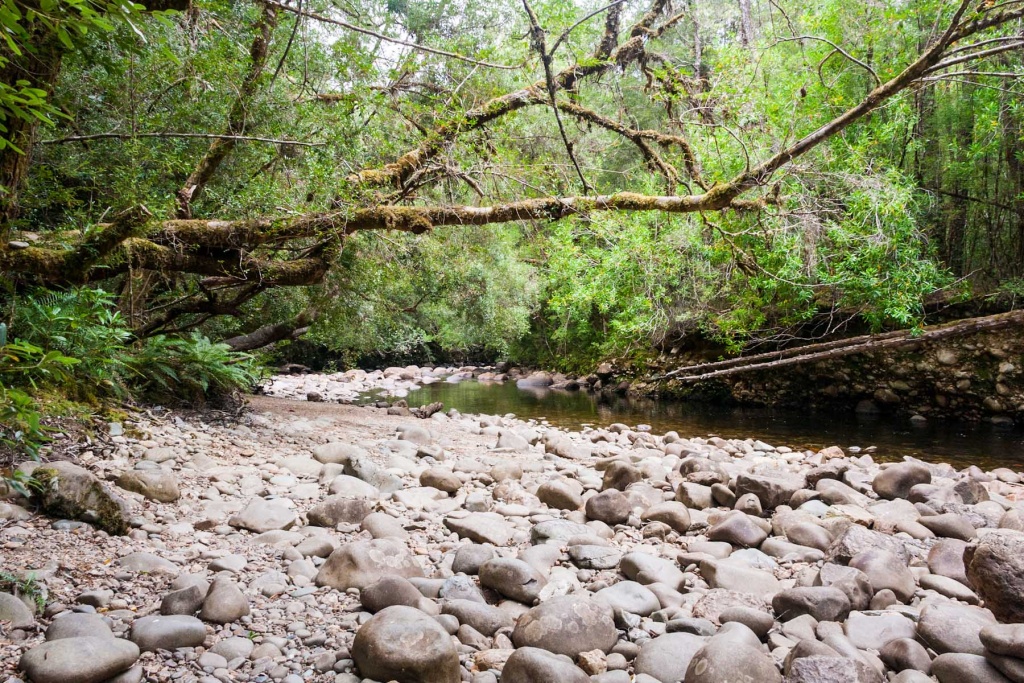
Franklin River Nature Trail
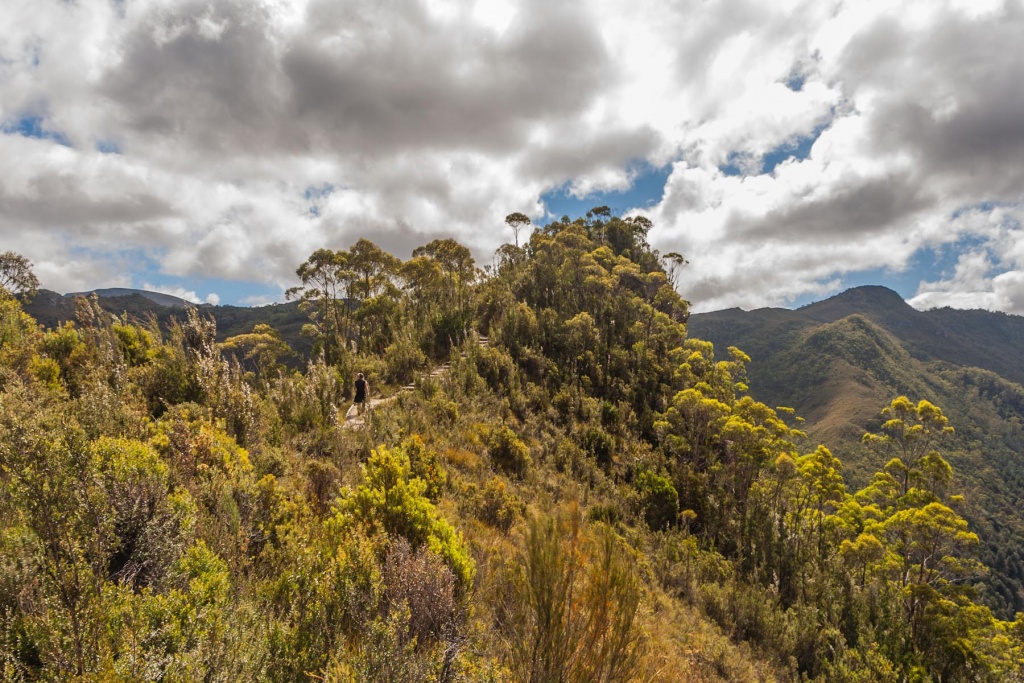
Donaghy's Hill
Nous poursuivons notre route vers l’Ouest, jouant aux parfaits touristes en nous arrêtant à chaque fois que nous croisons un panneau marron indiquant un site naturel – bon sauf celui annonçant trois jours de marche ! 😀 Nous parcourons ainsi le Franklin River Nature Trail, vingt minutes dans la forêt au bord des fleuves Franklin et Surprise, puis les quarante minutes de la Donaghys Hill qui ouvre un panorama à trois cent soixante degrés sur plus d’une dizaine des monts du Franklin Gordon Wild Rivers National Park, dont le Mont Ronald Cross – “sa” rue ne suffisait plus face à “mon” lac 😉 – ou le Mont Arrowsmith pour les fan de rock – quoi, almost ! C’est sur ce sentier que nous croisons notre deuxième serpent-tigre, à pieds cette fois-ci – nous, pas le reptile 😛 ! A peine l’avons nous repéré qu’il fuit nos pas et les vibrations qu’ils entraînent, comme quoi à moins de chercher à les embêter ou de vraiment manquer de chance en marchant sur un serpent profondément endormi, il en faut pour se faire mordre !
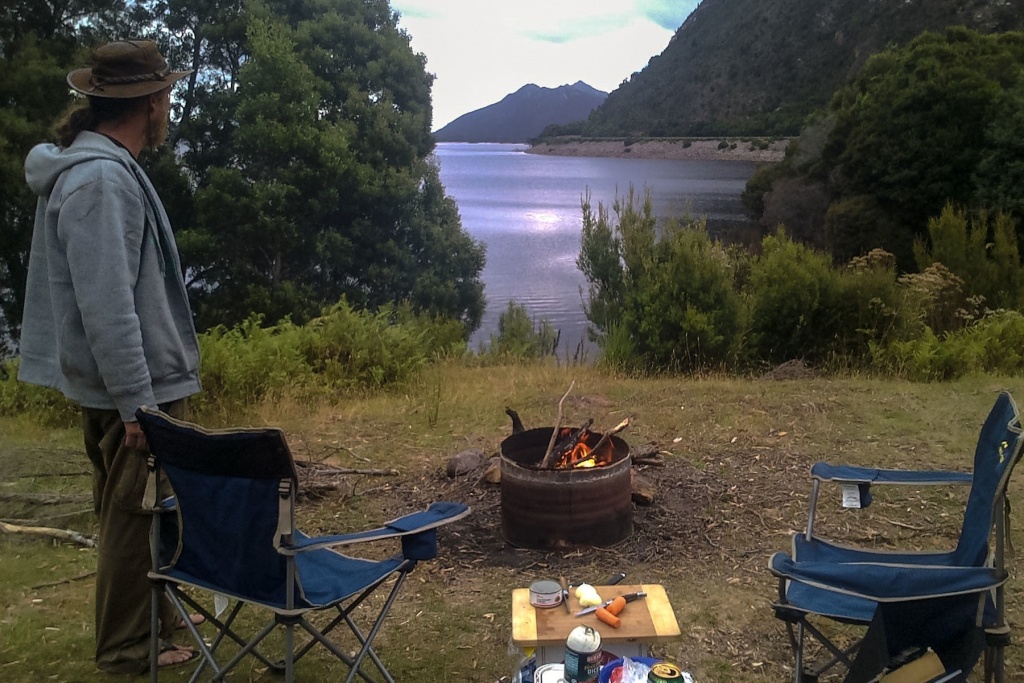
First campfire
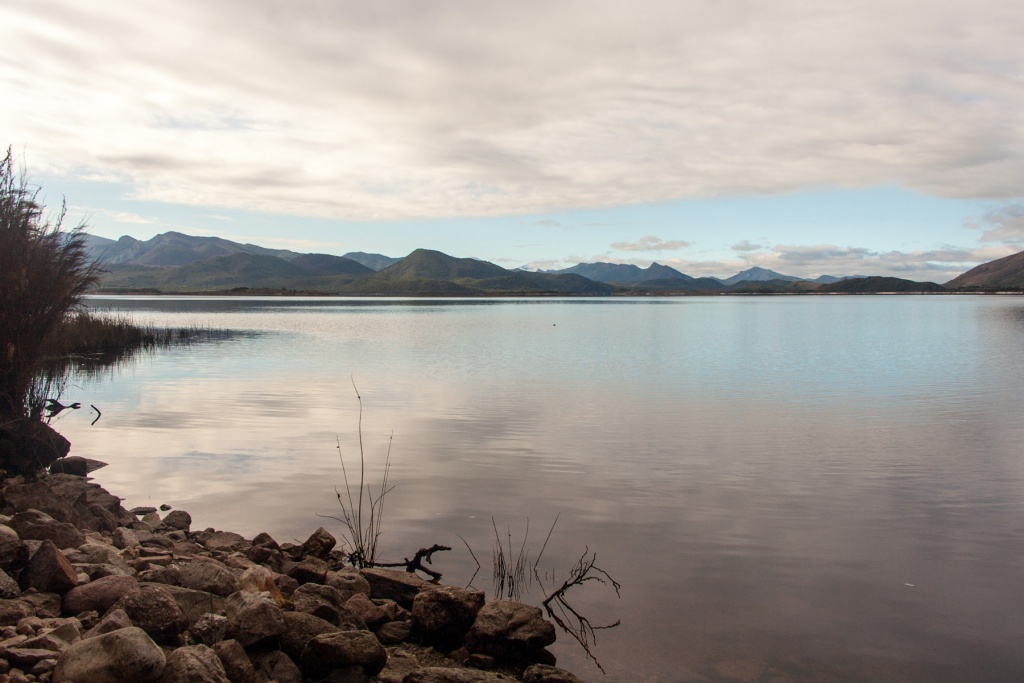
Lac Burbury
L’aire sur laquelle nous pensions passer la nuit est fermée et nous poursuivons notre route, visitant les jolies Nelson Falls avant de finalement camper sur les bords du lac Burbury, a sublime place where we light our first campfire with the impression of being alone in the world.
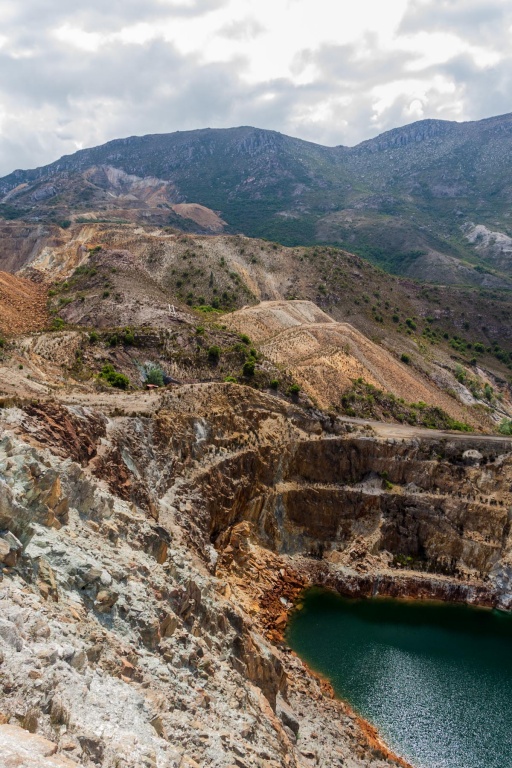
Iron Blow left
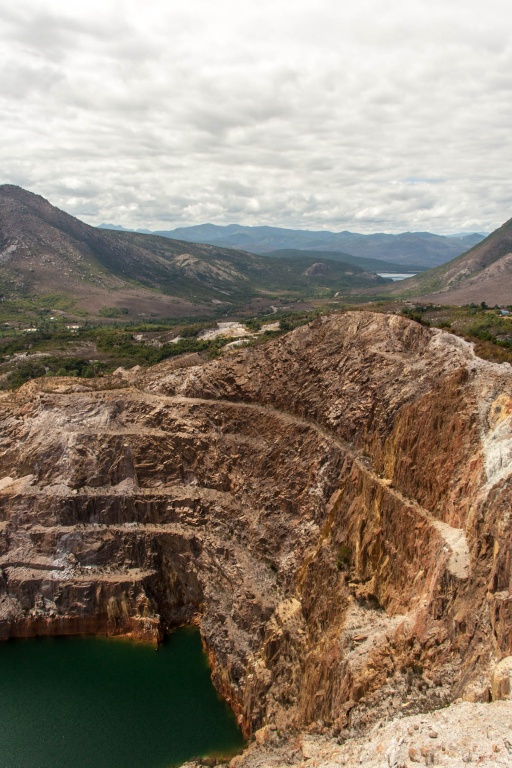
Iron Blow right
After a quick wash in the lake and another blackberry picking, Tuesday morning 17 February finds us traveling the last few kilometers to Queenstown, with a stop at the Iron Blow lookout, old iron mine in the region.
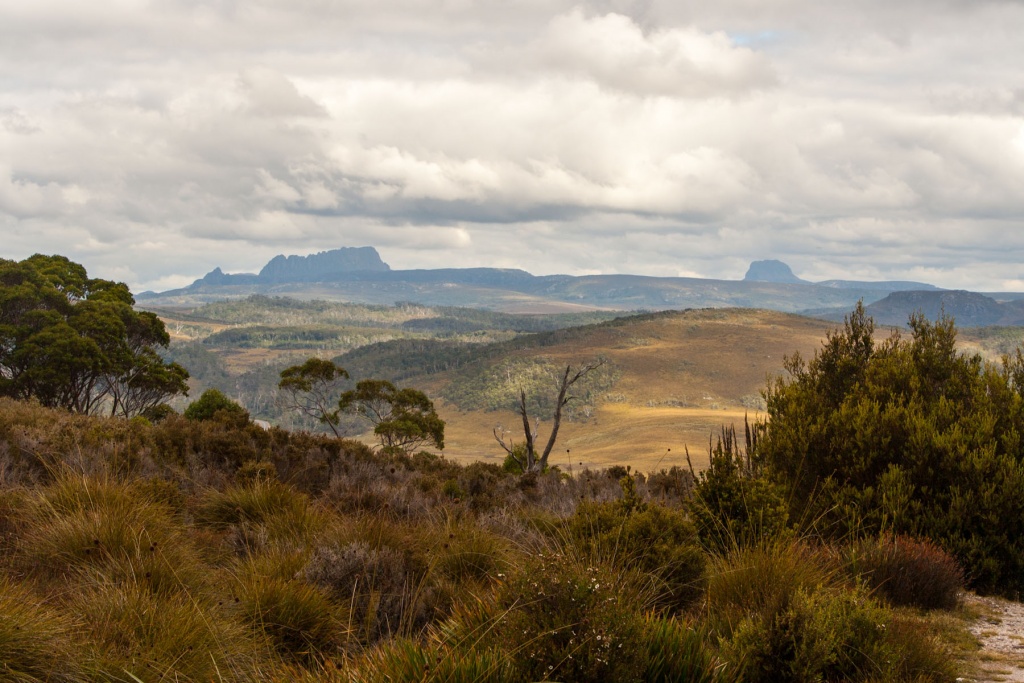
Cradle Mountain in the distance
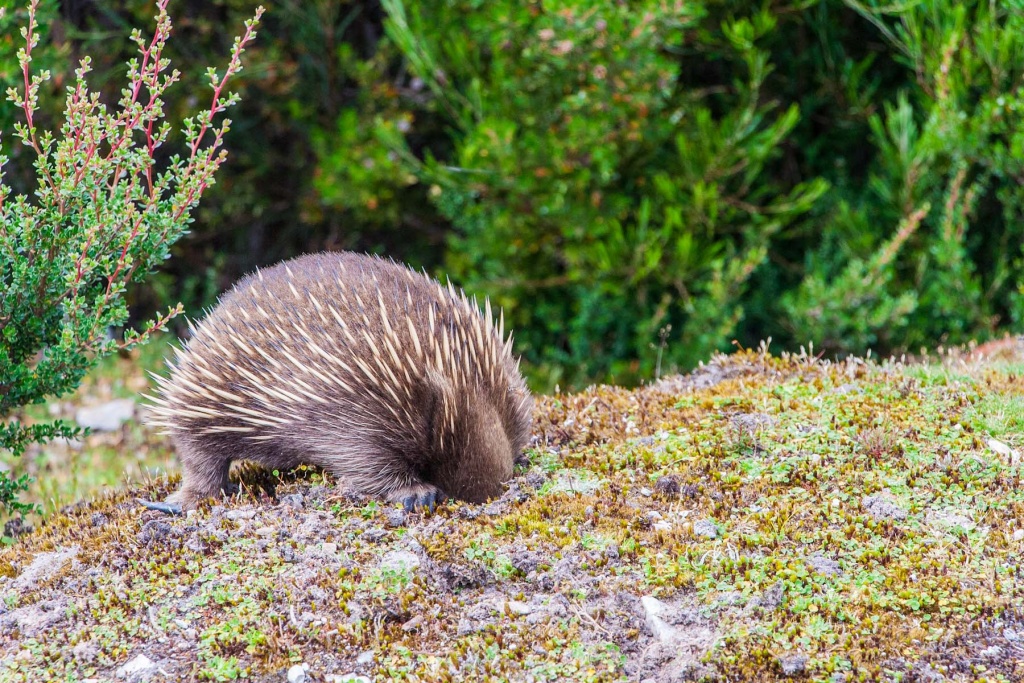
Who is it ?
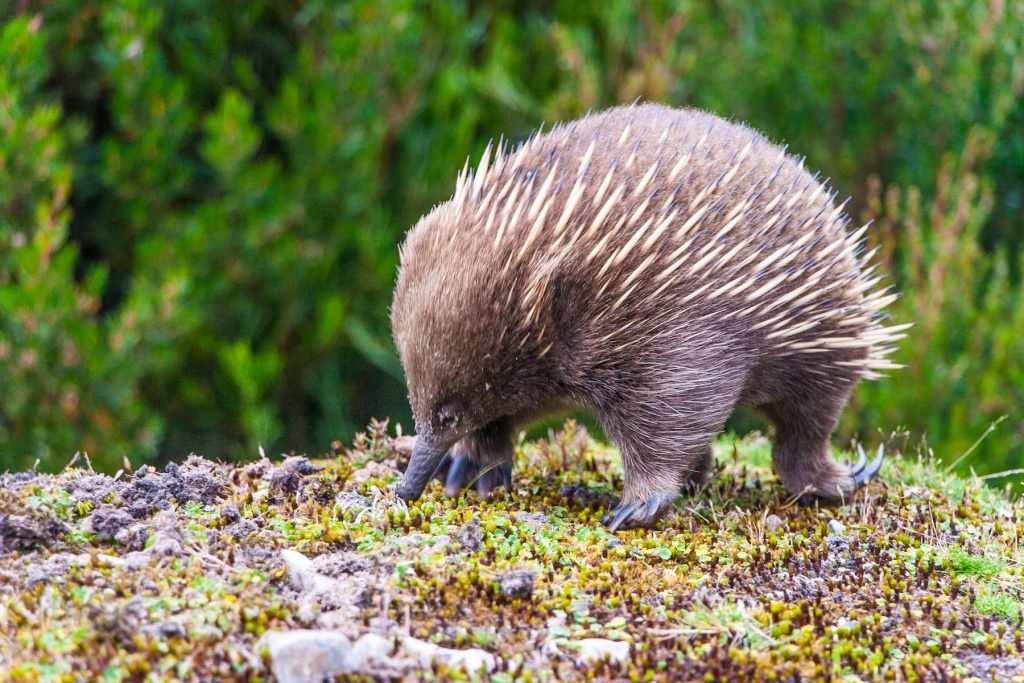
This is the echidna !
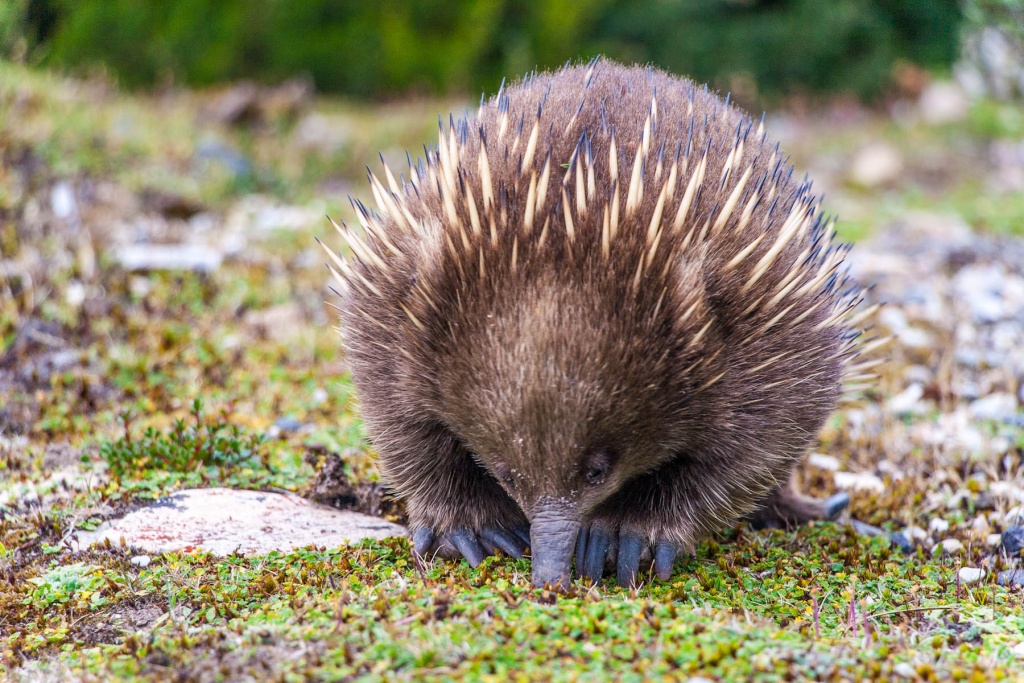
Busy dining ...
Then here we are going back towards the North, direction the famous Mount Cradle – instrument used for the search for gold which the mountain resembles – where as soon as we arrive we see our first echidna up close and alive – we have encountered them on the East Coast but from afar, this time I have photos to show you, although not perfectly clear !
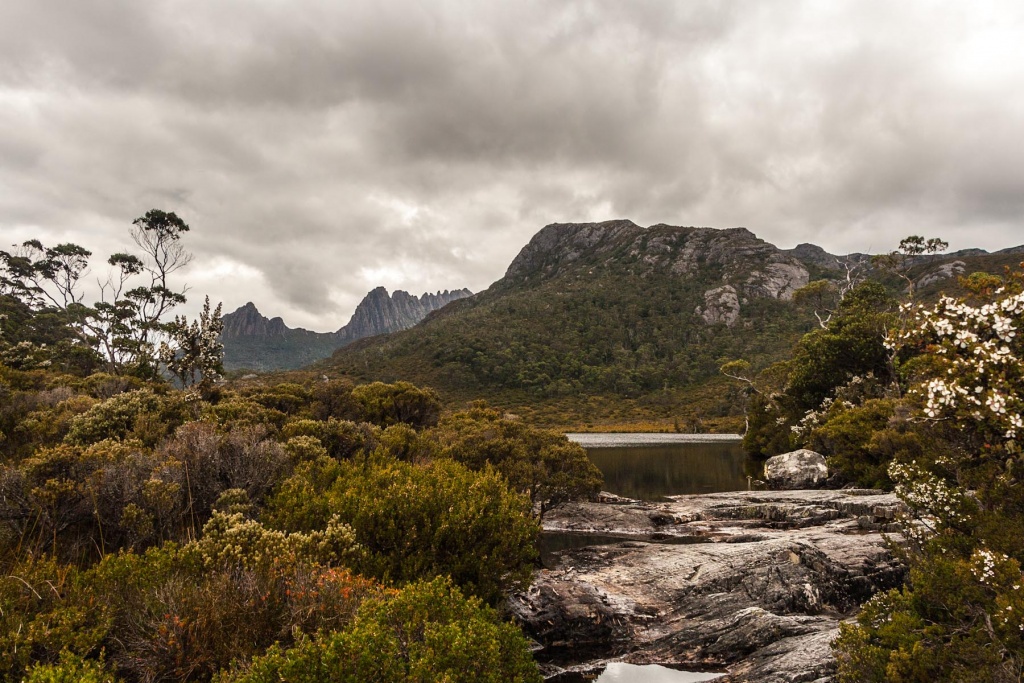
Lac Lilla (Cradle Mountain on the left)
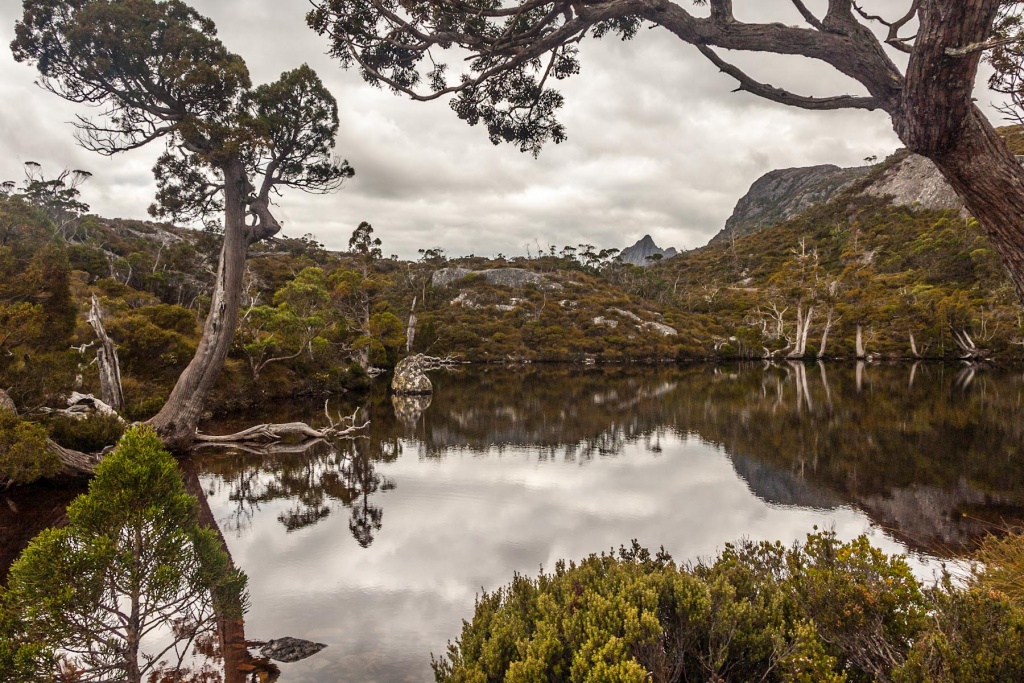
Wombat Pool
Many hikes are possible here, for all levels and schedules : we opt for the Crater Lake Circuit Walk despite the threatening weather – but which gives a certain dimension to the landscape – two hours from the shores of Dove Lake, along the north of Lake Lilla before going up to the water point called Wombat Pool. Indeed we spot the rather special droppings that the wombat often leaves on a rock to mark its territory., you can't miss them, They are almost square in shape – don’t ask me how he manages to do that !
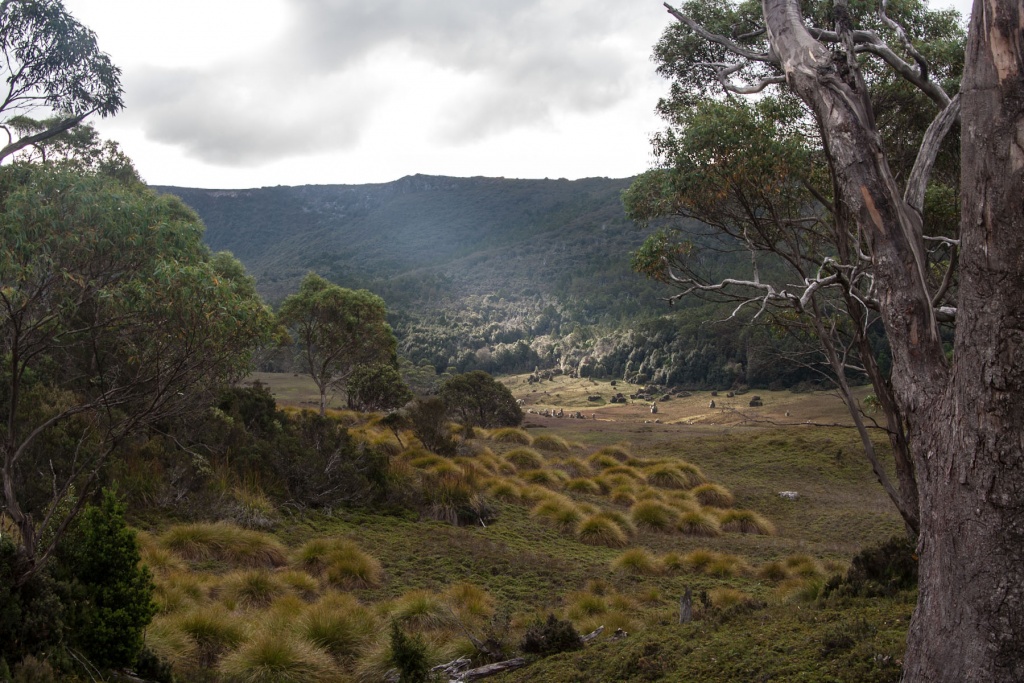
Sunbeam
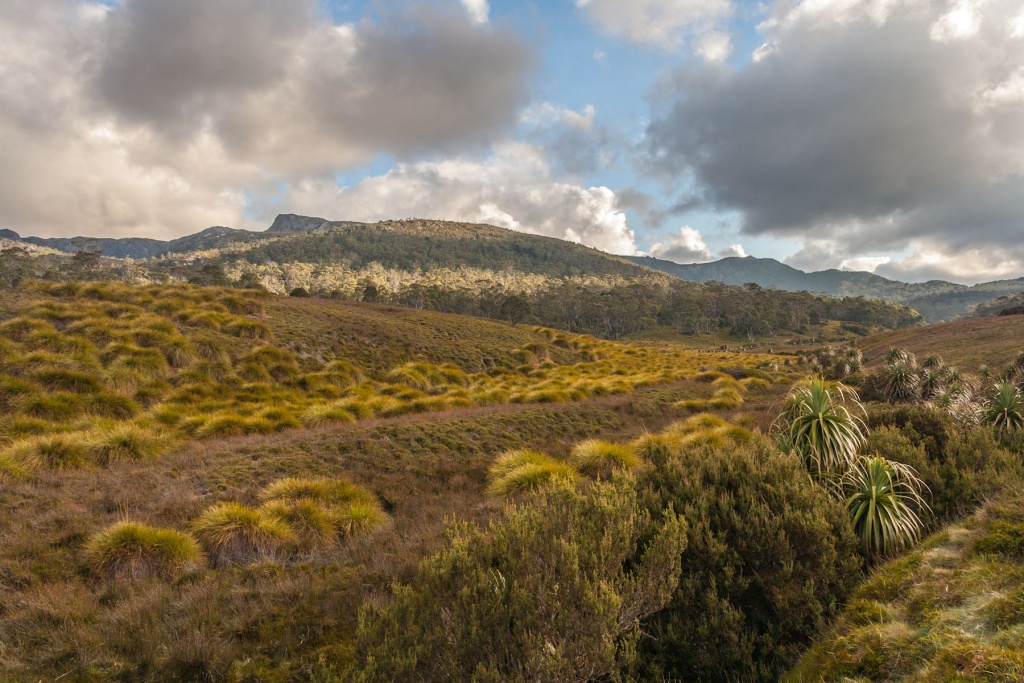
Parc national de Cradle Mountain
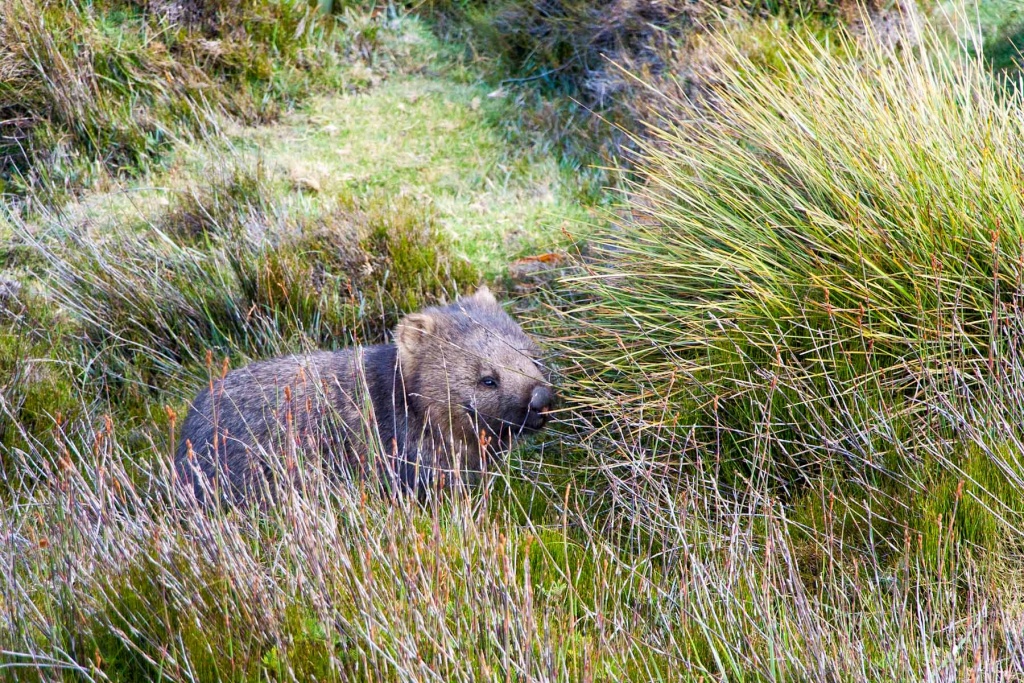
But who here ?
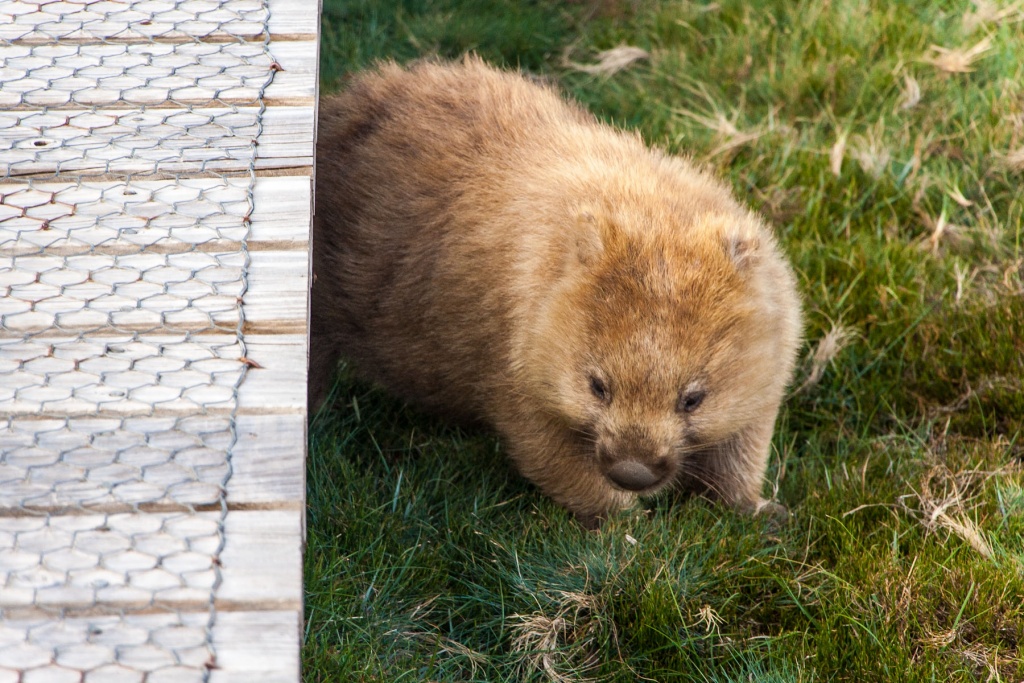
This is the wombat !
Admiring the landscape, our eyes also track the possible presence of the animal. It was after Crater Lake and the descent along its falls that we saw our first wombat ! He is followed by five others, including one peacefully grazing on the grass without worrying about our presence just a few centimeters away..
Delighted with our encounters with wildlife, we hit the road again at almost nightfall, rolling slowly so as not to crush the said fauna, to Barrington Lake, opposite the shore where we spent our first night in Tasmania. Animal day is not over as we eat a sandwich in the dark surrounded by wallabies, pademelons and others that we were unable to identify.
Here the good news is that Nanette will leave the hospital and will throw the wheelchair,crutches and return home after two and a half months of immobility !
Kisses Nanou
Kiss to both
Thank you for sharing your journey, the landscapes are breathtaking, and you cross paths with surprising and adorable little creatures ! Continue to amaze yourself and us too !
Kisses from Bordeaux to both !
Lots of love !
Lots of love !
De gros bisous à vous tous !
Je file regarder tes photos en grand, il y en quelques unes qui même en petit sont magnifiques ..
Thank you for sharing ..